
Reclaimed Wood vs. New Lumber: Which Is Right for Your Project?
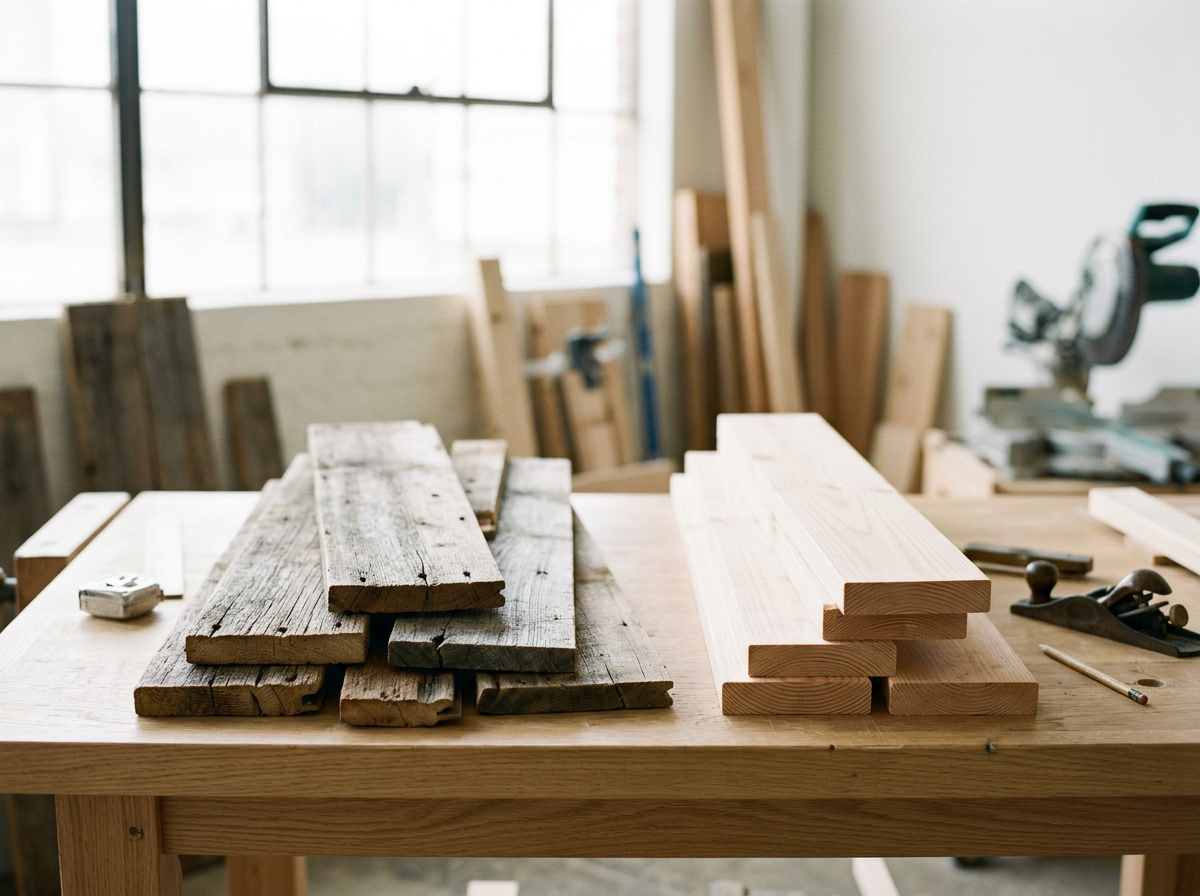
I've always thought wood carries more information than we give it credit for. You can see where it grew, how it was cut, how it changed over time, and sometimes even what it was used for before it reached my shop.
That’s one reason I enjoy working with reclaimed wood. But reclaimed isn't automatically better, and new lumber isn't automatically the right choice either. The best material depends on the piece we're making, the space it's going into, and what you want that piece to say.
If you're looking at reclaimed wood furniture in Wisconsin, there are a few things worth considering before choosing your material.
Reclaimed Wood Furniture in Wisconsin: What Makes It Different?
Reclaimed wood starts with a history.
It might have come from an old barn, a building, a beam, or another structure that has already had a useful life. The marks left behind are part of what makes it interesting. Old nail holes, changes in colour, saw marks, knots, cracks and variations in grain can all become part of the finished piece.
I don't see those things as problems that need to be hidden.
Sometimes I'll spend a long time looking at a piece of reclaimed timber before deciding how to use it. The goal isn't to make it look new. It's to understand what is already there and decide what deserves to remain visible.
That can make a reclaimed dining table feel very different from a table made from freshly milled boards. You're not just bringing a piece of wood into the room. You're bringing some of its past with it.
For the right project, that's a big part of the appeal.
New Lumber Gives You a Different Starting Point
New lumber has its own advantages.
When I'm working with newly milled wood, I have more control over the starting material. I can look for particular grain patterns, board dimensions, colour and character that suit the design.
That matters when a piece calls for a very specific shape or proportion.
A clean contemporary table, for example, might benefit from boards with a more consistent appearance. A built in might need predictable dimensions so everything fits together properly. In those situations, starting with new lumber can give me more freedom during the design and building process.
New doesn't mean without character, either.
A fresh board can have remarkable grain. Once it's planed and the surface is revealed, you sometimes see things that weren't obvious when you first picked it up. That's one of my favourite moments in the shop. The wood starts telling you something you couldn't see at first.
The difference is that with new lumber, you're beginning a new chapter rather than continuing an old one.
The Right Choice Depends on the Story
I don't think there is a universal winner between reclaimed wood and new lumber.
The better question is what you want the finished piece to feel like.
A reclaimed table can work beautifully in an older home where you want the furniture to feel connected to the building. It can also bring warmth into a newer space by introducing material with visible age and history.
New lumber can be the better fit when you want a quieter surface, a particular species, or a design that depends on precise dimensions and a more consistent appearance.
I've also found that the best choice sometimes becomes obvious once I understand the room.
A dining table isn't just a slab with four legs. People will sit around it for years. They'll have conversations there, spill things, move chairs around, put their feet up and eventually leave their own marks on it.
That makes the original material part of a much longer story.
What Should You Look for in Reclaimed Wood?
There is a temptation to think that older wood is automatically stronger or better.
That's not how I approach it.
I care about where the material came from, what condition it's in, and whether its character makes sense for the piece. A board with an interesting history still needs to be suitable for the job.
Preparation matters, but I don't think it should be the first thing we talk about.
The first thing I want to know is what the wood has already lived through.
Then I can look at its condition, grain, dimensions and any features that will affect the design. Some marks might become focal points. Others may need to be worked around. Sometimes a natural imperfection becomes the reason a particular piece works.
That's where the judgement of a custom woodworker in Wisconsin becomes valuable. You're not simply picking a material from a shelf. You're deciding how that material can become part of something new without losing what made it interesting in the first place.
New Lumber Can Be Just as Personal
New wood can sometimes get treated as the plain alternative.
I don't see it that way.
A new slab can have an incredible natural edge. A board can have a knot in exactly the right place. Grain can move across a surface in a way that makes the entire design feel intentional without being overly controlled.
I don't look for perfect boards.
I'm usually more interested in what makes a particular piece of wood worth paying attention to.
That might be the way the grain moves through a slab. It might be a colour variation that becomes more visible after finishing. It might be a natural edge that tells me the piece doesn't need a perfectly straight line.
The design starts with listening to the material.
That's a big part of fine woodworking in Blue Mounds WI. The work isn't about forcing every piece of wood to behave the same way. It's about understanding what the material is giving you and making thoughtful decisions from there.
Reclaimed and New Wood Can Work Together
There doesn't always have to be a choice between the two.
I've worked with projects where different materials can tell different parts of the story. Reclaimed timber might bring history and texture, while new lumber provides the consistency needed for another part of the design.
That can be especially effective in larger interiors.
A kitchen, built in or remodelled space doesn't have to look as though every surface came from the same batch of material. Wood, stone, metal and other materials can sit together naturally when there's a reason behind the choices.
The goal isn't perfect matching.
It's creating a space where the materials make sense together.
You can see that thinking throughout the projects and custom work, where the material choices are part of the design rather than an afterthought.
Think About How the Piece Will Age
This is one of the things I like most about working with natural wood.
It changes.
A new piece won't look exactly the same ten years from now. The colour can deepen. Small marks accumulate. The surface develops a patina from being handled and lived with.
Reclaimed wood starts that journey from a different point.
It may already have decades of colour and wear behind it, which means the finished piece can feel established almost immediately. New lumber gives you the chance to watch that story develop from the beginning.
Neither approach is better.
They're simply different ways of thinking about time.
Furniture should have enough presence to stay in a home for a long time. I like the idea that a table I build today might eventually belong to someone who hasn't even been born yet.
That changes how I think about the material.
So Which Wood Should You Choose?
Start with the feeling you want.
If you want visible history, irregularity and marks that tell you the material has already lived a life, reclaimed wood may be the natural choice. If you want a particular species, cleaner grain or more control over dimensions and appearance, new lumber may make more sense.
Then think about the room.
Think about how the piece will be used. Think about what you want to notice five years from now. Most of all, think about whether you want the material to quietly support the design or become part of the conversation.
That's usually where the answer starts to become clear.
If you're considering reclaimed wood furniture in Wisconsin, I’m happy to talk through the possibilities with you. Sometimes the right material becomes obvious once we sit down and look at the project together.
You can also spend some time looking through the custom furniture projects and lookbook to see how different materials can shape a finished piece.
Frequently Asked Questions
Is reclaimed wood better than new lumber for furniture?
Not necessarily. Reclaimed wood offers history, character and visible signs of its previous life. New lumber gives more control over dimensions, grain and appearance. The right choice depends on the design and the space.
Is reclaimed wood strong enough for a dining table?
It can be, provided the material is suitable for the application and prepared properly. The condition, species, dimensions and history of the timber all matter.
Does reclaimed wood need special care?
It can require a little more thought because every piece is different. The finish and maintenance should suit the wood and how the furniture will be used.
Can new lumber still have a natural, rustic appearance?
Absolutely. New timber can have knots, natural edges, colour variation and distinctive grain. The material doesn't need to be reclaimed to have character.
How do you decide which wood is right for a custom piece?
I start by understanding the space, how the furniture will be used and what the client wants the piece to feel like. From there, the wood itself helps guide the decision.
Can reclaimed and new wood be used in the same project?
Yes. Combining materials can create contrast and give different parts of a project their own character. The important thing is that the choices feel connected to the overall design.
Where can I see examples of custom wood furniture in Wisconsin?
You can explore the With The Trees Design projects and lookbook to see examples of furniture and interior work using natural materials in different ways.