
Behind the Build: How We Design One-of-a-Kind Furniture
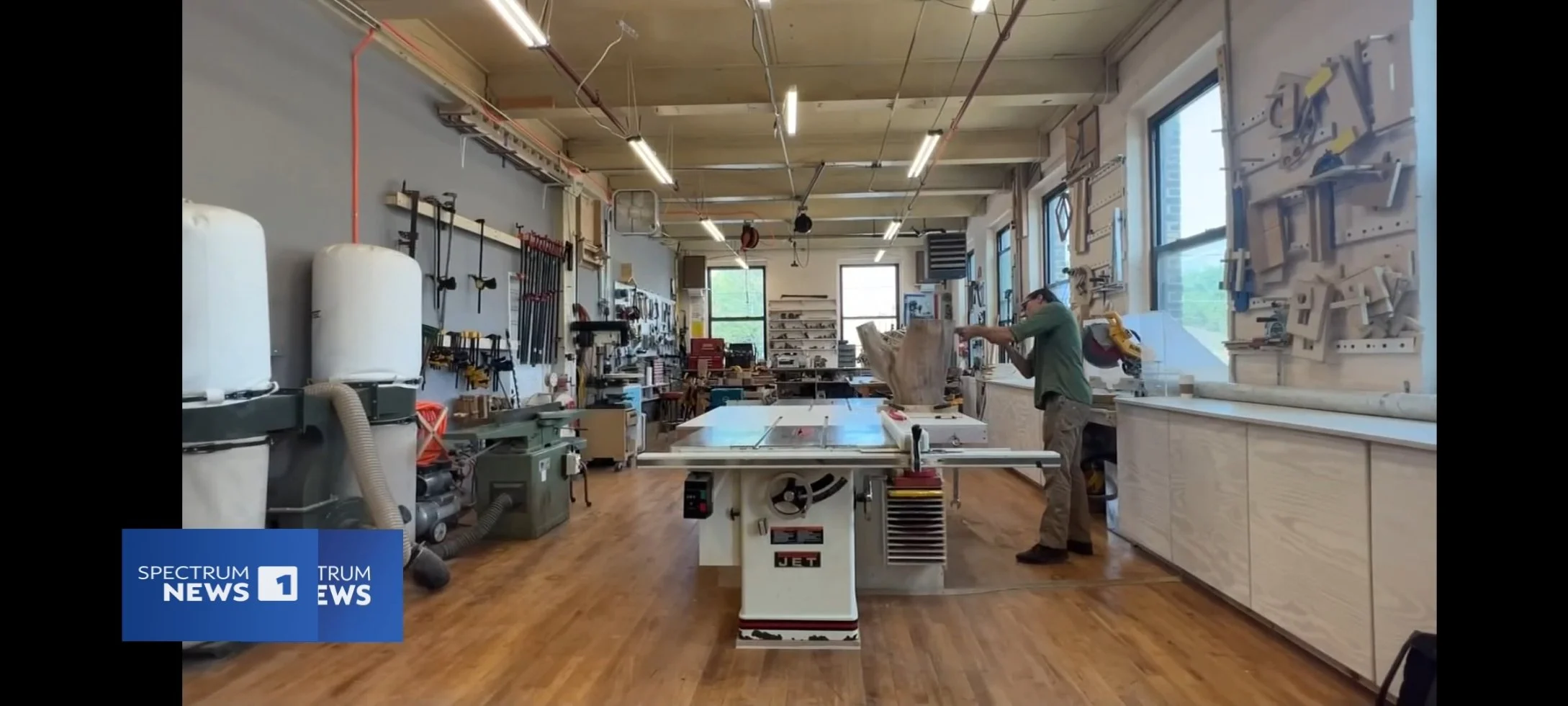
I don't start a custom furniture project with a drawing.
I start by looking.
The room. The light. The people who'll use it. The wood that's available. Sometimes I'll spend more time studying a slab than I do cutting it. I'm looking for the grain, the movement, the knots and the small details that tell me what the piece could become.
That's a big part of custom furniture design in Wisconsin. The goal isn't to take a standard table and change its dimensions. It's to design something that makes sense for a particular space and the people who live with it.
The best pieces usually start with listening.
Custom furniture design in Wisconsin starts with the material
Wood has already done most of the designing.
A tree spent decades growing around weather, soil, branches and changes in light. Those things leave marks. A knot might interrupt an otherwise clean section of grain. The edge might curve in a way no machine could reproduce. A change in colour can tell you where a branch once grew.
I don't see those things as problems that need to be removed.
They're part of the reason to use the wood in the first place.
When I'm choosing material for a project, I'll often lay several pieces out and look at them from different angles. A board that looks ordinary at first can reveal something completely different after it's planed. Sometimes the piece with the most obvious character becomes the one that gives the finished furniture its personality.
That's why I spend so much time on wood selection before making the first cut.
For a deeper look at how I approach that decision, choosing the right wood for a custom furniture piece explains some of the thinking that happens before construction begins.
The room tells me more than a measurement does
Dimensions matter.
They're just not the whole story.
A dining table might need to fit eight people comfortably. A kitchen island might need enough working space for two people to move around without getting in each other's way. A built in might need to hold books, equipment and the things a family doesn't want sitting in plain sight.
But I also want to understand how the space feels.
Where does the morning light come from? What will someone see when they walk into the room? Does the furniture need to feel quiet, or should it become the thing your eye lands on first?
Those details affect the design.
I've found that the strongest custom pieces don't look as though they've simply been placed in a room. They feel as though they belong there.
That can mean keeping a natural edge. It can mean changing the proportions of a table. It might mean designing storage around an awkward wall rather than forcing a standard cabinet into the space.
The decisions are small.
Together, they change the whole piece.
From an idea to something you can live with
Most clients don't arrive with a complete furniture design.
They might have a photograph they like. They might know they want a large dining table but have no idea what species of wood would suit it. Sometimes they simply know that the room needs something different.
That's enough to begin.
I like the early part of a project because there's room to explore. We can talk about how you use the space, what you want the furniture to feel like and what matters to you about the material.
Then the practical decisions start to take shape.
For a dining table, that might mean deciding whether the natural edge should remain visible. For a kitchen, it could mean choosing between a quieter timber selection and a more expressive slab. For a commercial space, durability and daily use may change the design considerably.
The finished piece should reflect those conversations.
You can see examples of that approach through the With The Trees Design projects and the lookbook.
Custom kitchen design in Wisconsin requires a different kind of thinking
A kitchen is not a showroom.
It's a working room.
People cook there. They gather around islands. They leave things on counters. Children sit at the edge. Friends pull up a chair. A good kitchen has to handle all of that without losing its sense of place.
That changes how I approach custom kitchen design in Wisconsin.
I think about how the space will actually be used rather than simply how it will look in a photograph. Storage, work surfaces, sight lines and materials all need to work together.
The same thinking applies to built ins and millwork. A cabinet isn't interesting just because it has been made from beautiful wood. It becomes interesting when the design solves something specific in the room and still feels like it belongs there years later.
That's why I prefer designing around the space instead of trying to make the space fit a predetermined product.
Sometimes the material becomes the centre of the design
There are projects where the wood is quiet.
Then there are projects where it refuses to be ignored.
Rammed earth tables are a good example. The material combination creates a very different relationship between the table and the room. The result isn't simply a surface with four legs. It becomes something with weight, texture and presence.
I've also worked with natural forms that would be difficult to reproduce if we started with a blank sheet of paper. That's where custom work becomes interesting.
The material gives me something to respond to.
The Rammed Earth Tables are one example of how that approach can lead somewhere quite different from conventional furniture.
The process changes as the piece takes shape
There comes a point when planning has to give way to making.
That's when the character of the wood starts becoming clearer.
Planing can reveal grain that wasn't obvious before. A cut can change how two sections relate to one another. An edge that looked too irregular on the workbench can suddenly make perfect sense once the piece is sitting in the room.
I don't want to erase those moments.
Some of the best decisions happen because the material gives me new information halfway through the process.
That's also why custom furniture takes patience. The piece isn't being pushed through a fixed production process. I'm responding to what is actually in front of me.
You can see more about that process in The Journey of a Custom Table.
Good custom furniture should have somewhere to go
I think about the next ten years more than the next ten minutes.
A table will get scratched. Wood will change colour. A family will spill something on it. Someone will move into the house. Someone else might inherit the piece.
That's part of the point.
Furniture shouldn't have to remain frozen in its original condition to remain beautiful.
Wood changes. Homes change. People change.
I've always liked the idea that a piece can collect a little history of its own. The marks that appear through normal use aren't necessarily damage. Sometimes they're evidence that the furniture is being lived with.
That idea is part of why I enjoy working with natural edges and distinctive timber rather than trying to make every surface perfectly uniform.
If you'd like to see how that thinking applies to different pieces, Why Live Edge Furniture Never Goes Out of Style explores the relationship between natural form and furniture.
Custom work also makes sense beyond the home
The same principles apply in commercial spaces, although the requirements change.
A restaurant table might see hundreds of hands each week. A reception area needs to make an impression without becoming distracting. An office might need built in furniture that handles daily work while still giving the room some warmth.
That's where custom commercial furniture Wisconsin projects can become particularly rewarding.
The design has to respond to the way a business operates. It needs to work hard, but it doesn't have to look institutional.
I enjoy finding that balance.
A commercial piece can still have visible grain, natural variation and a strong connection to the material. It just needs to stand up to a different kind of use.
Why one of a kind furniture is worth the process
There are plenty of places to buy a table.
Custom work isn't about having fewer choices. It's about making choices that actually mean something.
You can decide what the furniture should feel like. You can choose a piece of timber because you like the way the grain moves through it. You can build around the proportions of your room instead of compromising them.
And you get to be part of the process.
That's what I like most about custom furniture design in Wisconsin. The finished piece isn't just something that came out of my shop. It has a reason for being the way it is.
The wood came from somewhere.
The room had its own needs.
You brought your own ideas to the table.
My job is to bring those things together without taking away what made them interesting in the first place.
Finding the right custom woodworker in Wisconsin
Choosing a custom woodworker in Wisconsin isn't only about looking at finished photographs.
Look at how the work is explained.
Pay attention to the materials. Ask where the wood came from. Ask why a certain design decision was made. See whether the maker is interested in your space, or whether they're simply trying to fit your project into something they've already built.
For me, the conversation matters.
A custom piece should begin with understanding what you're trying to create, even if you don't have the words for it yet.
From there, we can look at the room, the material and the possibilities.
Let's build something that belongs in your space
I don't think every piece of furniture needs to be unusual.
It needs to be right.
Sometimes that means a simple table made from a beautiful slab. Sometimes it's a kitchen designed around how your family actually cooks. Sometimes it's a commercial piece that gives a busy space a sense of warmth.
The interesting part is finding the answer.
If you're considering custom furniture design in Wisconsin, I'd be glad to hear what you're thinking about. Bring the rough idea, the photograph, the room measurements, or even just the problem you're trying to solve.
We'll start there.
You can get in touch with me about your project and see where the material and the space take us.