
Why No Two Pieces Are Ever the Same
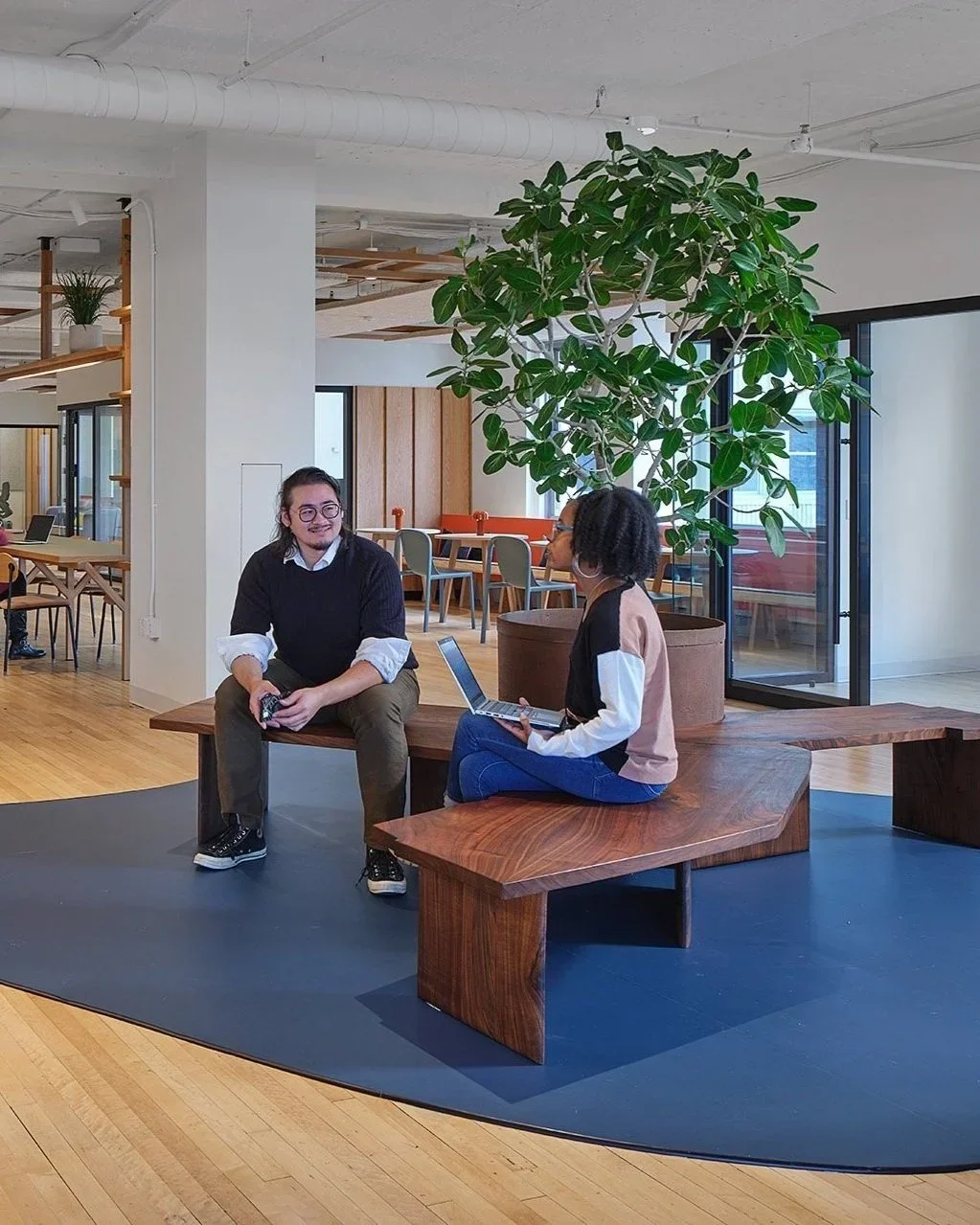
One-of-a-kind furniture in Wisconsin.
No two pieces should look exactly alike. That's especially true when you're working with wood that grew for decades before it ever reached the shop.
I don't start with a perfectly uniform board and decide how to make it interesting. Most of the time, the interesting part is already there. My job is to notice it before I cut it away.
One of a Kind Furniture Wisconsin Starts With the Wood
When a new slab comes into the shop, I don't immediately start thinking about dimensions.
I look at it.
I look at where the grain tightens up and where it opens. I look for knots, changes in color, old branch points and the shape of the natural edge. Sometimes I'll turn a slab around several times before I have a clear idea of what it should become.
That's not wasted time.
I've had pieces where the first idea I had wasn't the right one. The grain changed the proportions. A natural edge made more sense on one side than the other. Something I might have normally cut away ended up becoming one of the details that gave the finished piece its character.
That's the part of making furniture I enjoy.
The wood gives me something to respond to.
The Tree Often Gives You the Design
I don't look for perfect boards.
A perfectly straight, completely uniform board can certainly be useful, but natural variation is usually more interesting to work around.
Take a walnut slab. One section might be a deep brown while another has much lighter sapwood running along the edge. The grain might travel straight for several feet and then suddenly change direction around an old branch.
I could cut all of that away and make the board more predictable.
I usually don't.
If that change in grain is what makes the slab interesting, I'll find a way to work with it.
The same thing happens with knots. A knot in the wrong place can interfere with the way a piece needs to function. A knot in the right place can become the feature that makes someone stop and look twice.
The difference is in how the wood is used.
I've written about choosing the right wood for a custom furniture piece because wood selection isn't just a matter of picking a species from a list. The piece in front of you matters just as much.
Two Slabs Can Tell Completely Different Stories
Even two slabs cut from the same tree won't necessarily give you the same result.
A tree doesn't grow like a manufactured product.
Branches affect the grain. Growth conditions change from one part of the trunk to another. The outside of the tree can look very different from the center.
Then I have to decide how to orient the slab.
That decision alone can change the entire piece.
Turn the slab one way and a particular grain pattern might run across the length of a table. Turn it another way and the same pattern may become the feature at one end.
Neither choice is automatically right.
I have to think about the room, the proportions and what the wood is showing me.
That's why two tables made from the same species can end up looking nothing alike.
Sometimes the Wood Changes My Original Plan
This happens more often than people might expect.
I'll start with an idea for the shape of a piece. Then I spend time with the actual wood and see something that changes my mind.
Maybe there's a natural opening that would look better preserved than cut away.
Maybe the grain pulls strongly toward one end, so changing the orientation makes the whole piece feel more balanced.
Maybe the live edge has a curve that would be lost if I straightened it.
Those are the moments that make custom work different from ordering something from a catalogue.
The material can change the plan.
I don't see that as a problem. That's often where the best decisions come from.
You can see examples of that kind of thinking throughout the Projects collection, where different spaces and materials have led to very different finished pieces.
A Knot Can Be the Part Everyone Remembers
I've learned not to make decisions about a piece of wood too quickly.
A knot may look like something that needs to be removed when you're looking at the rough slab. Once the surface is planed and the surrounding grain becomes clearer, it can look completely different.
The same goes for cracks and changes in color.
Not every natural feature should stay. Some need to be addressed because of how the furniture will be used. But I don't automatically remove something just because it isn't perfectly uniform.
If a feature can be kept without compromising the piece, I like giving it a chance.
That's one of the things I enjoy about live edge furniture. You can still see something of the original tree in the finished furniture.
You don't have to wonder where the character came from.
The Room Changes the Design Too
The wood isn't the only thing that makes a piece unique.
The room matters.
If I'm designing a dining table, I need to know how many people will actually sit around it. I need to think about how much space there is for chairs and how the table will relate to the rest of the room.
A table for a large family that eats together every night has different demands from a smaller table in a quiet dining room used mostly for special occasions.
The same applies to built ins.
A built in can't simply be dropped into a room like a freestanding piece of furniture. The walls, windows, doors and things already in the space all affect what makes sense.
That's why I approach custom built ins and millwork as part of the room rather than as an isolated object.
The material matters.
The room matters.
How you live in it matters too.
I Don't Want to Make Natural Wood Look Manufactured
There are plenty of ways to make wood look more uniform.
You can cut away unusual edges. You can select boards that are similar in color. You can arrange everything so the grain feels predictable.
Sometimes that's the right choice.
But if the reason for using natural wood is to see some of its character, I don't see much point in removing all of it.
I like seeing the small differences.
The darker section in a walnut slab.
The tight grain around an old branch.
The slight curve of an edge that would have disappeared if I had made it perfectly straight.
Those are the details that tell you you're looking at a piece of wood rather than a printed surface made to resemble wood.
Furniture Changes After It Leaves the Shop
A new piece of furniture isn't finished in the sense that nothing about it will ever change.
Wood keeps changing.
Light can deepen or soften its color. Areas that get touched regularly can develop a different feel from areas that rarely get used. Small marks from everyday life start to accumulate.
I don't see that as furniture becoming worse.
I like the idea that a table can show some evidence of the years it has spent with a family.
Think about an old wooden table you've seen in someone's home. You can often tell where people sit most often. The surface feels different in the places that have been touched thousands of times.
That kind of history can't be added with a finish.
It has to be lived.
Why One of a Kind Furniture Wisconsin Means More Than Having Something Different
For me, the point isn't simply that nobody else has the same table.
It's that the piece was made for a particular place, from a particular piece of material, for people who will use it every day.
That's a much more interesting kind of custom.
You might choose a slab because one section of grain reminds you of something. You might want to keep a natural edge because it works with the architecture of the room. You might decide that a mark in the wood is worth keeping because removing it would make the piece feel less like the material you originally chose.
Those decisions become part of the story of the furniture.
I've always liked that idea.
A tree can spend decades growing before it becomes part of a home. Then the furniture can spend decades being used, cared for and passed along.
That's a long life for one piece of wood.
The journey of a custom table is really a journey through those different stages, from the material itself to the people who eventually live with it.
There Isn't a Formula for Every Piece
I don't want to build the same table over and over with different dimensions.
That would make the work easier, but it would also take away one of the reasons I enjoy it.
The next slab will be different.
The next room will be different.
The next person will have a different reason for wanting the piece.
Sometimes a client knows exactly what they want. Other times, they know they want a table with character but aren't sure what that means yet.
That's fine.
We can look at the material together and talk through what makes sense.
The Lookbook is a good place to see how different materials, shapes and spaces can lead to very different results.
The Best Part Is Seeing What the Wood Becomes
I still like the moment when a piece starts to reveal itself.
The rough slab is sitting there, and there are several possible directions it could take.
Then one decision makes sense.
The grain looks better this way.
The edge should stay.
That knot belongs right there.
The proportions finally feel right.
Those small decisions add up.
That's why I don't want every piece to come out looking the same. If I did, I'd be ignoring most of what makes natural wood worth working with in the first place.
Every tree grew differently.
Every slab carries those differences.
Every room asks for something different.
So the finished piece should be different too.
If you're thinking about a custom piece for your home, start with the space and the way you want to use it. Bring me the questions you have, even if you don't have the design figured out yet. You can contact me, and we can talk through the possibilities together.
Frequently Asked Questions
Why is one of a kind furniture different from regular custom furniture?
Custom furniture is made around a person's needs and space. One of a kind furniture also responds to the individual piece of material being used. With natural wood, the grain, shape, knots and color variation can all influence the final design.
Can two tables made from the same type of wood look completely different?
Yes. Even the same species can vary considerably. The grain, color, knots, natural edges and the way a slab is oriented can all change the finished appearance.
Do you keep knots and other natural imperfections in the furniture?
When they work with the design and don't compromise the furniture, I often prefer to keep them. Not every feature should remain, but I don't remove character simply because it isn't perfectly uniform.
Can I choose the wood for my custom furniture?
Yes. Wood selection can be part of the conversation from the beginning. The right material depends on the room, how the furniture will be used and the qualities you want to see in the finished piece.
Will natural wood change color over time?
Yes. Natural wood can change as it is exposed to light and used over the years. Different species change in different ways, and those changes become part of the furniture's history.
What happens if I don't know exactly what design I want?
That's common. You don't need to arrive with every detail decided. We can start with the room, how you'll use the furniture and the type of wood or character you're drawn to, then work from there.
Can a custom table be designed around a particular room?
Absolutely. The room's dimensions, architecture, lighting and how people move around it all affect the design. That's one of the advantages of making the piece specifically for the space instead of choosing a standard size.