
Artisan Woodworking in Wisconsin: Preserving Nature in Functional Furniture
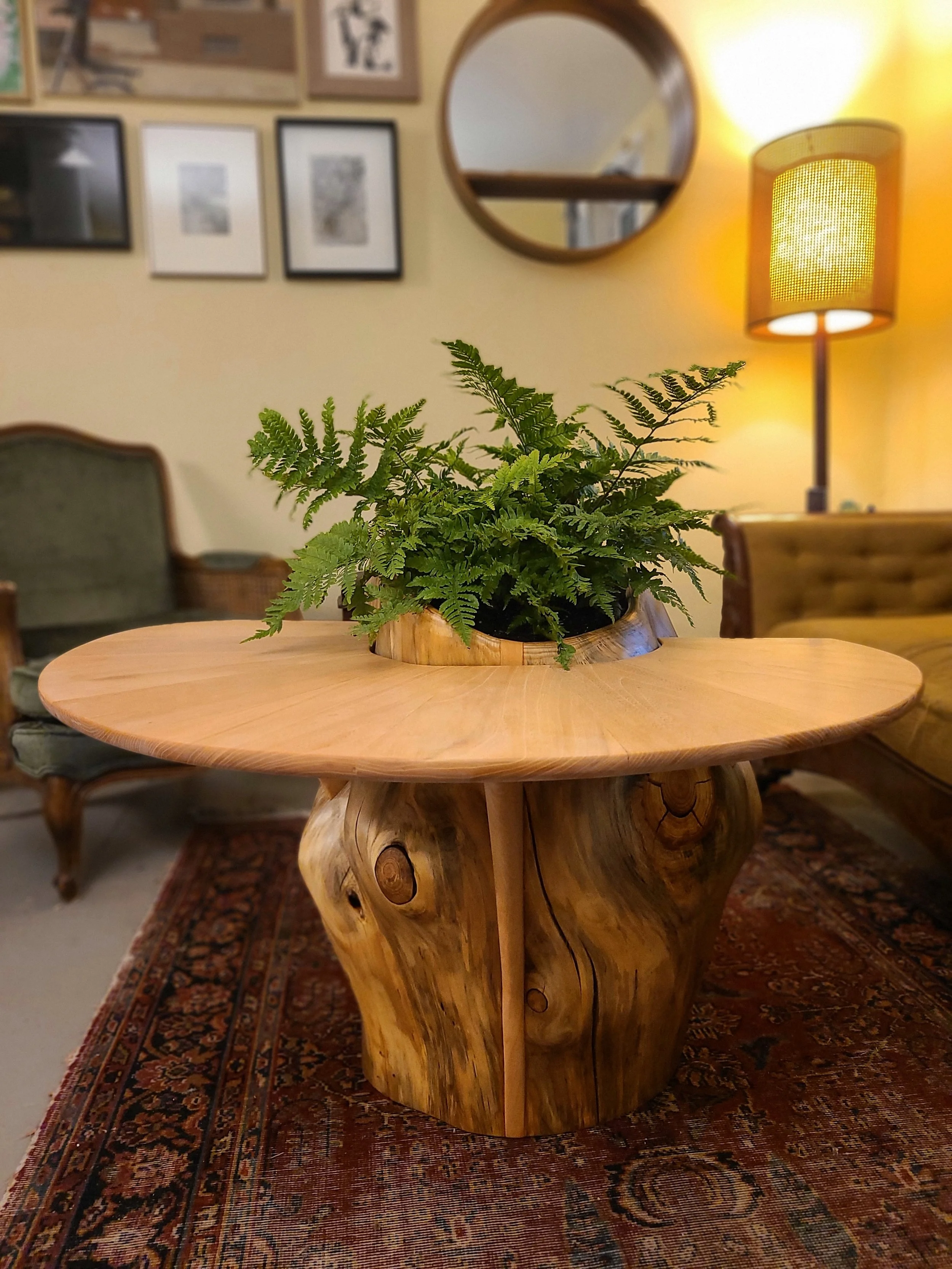
Artisan woodworking in Wisconsin starts with paying attention to the wood.
I don't always know what a piece will become when it first comes into the shop. Sometimes I have a clear idea. Other times, the wood changes my mind. A natural edge, an unusual knot, or a section of grain can be worth keeping, even when it doesn't fit neatly into the original plan.
That's where the interesting work begins.
What Artisan Woodworking in Wisconsin Looks Like in the Shop
When I bring a slab into the shop, I don't start by cutting it to a drawing.
I look at it first.
I look at how the grain moves. I look for knots, cracks, changes in color, and the shape of the natural edge. I'll turn it around and look at it from different directions. Sometimes I'll leave it sitting there for a while before deciding where the first cut should go.
That might sound like a small thing, but it can change the entire piece.
I've had wood where the most interesting part wasn't in the middle of the slab. It was off to one side, exactly where a straight cut would have removed it. In those cases, the question isn't simply how to get the wood to match the drawing. The better question is whether the drawing still makes sense once the wood is in front of me.
That is a big part of artisan woodworking in Wisconsin.
The material gets a say.
I Don't Start by Trying to Make the Wood Perfect
There are plenty of ways to make a piece of wood look more uniform.
I don't always want to.
A knot can be part of the character of a tabletop. A natural edge can give a piece a softer relationship with the room. A change in grain can draw your eye across the surface without needing anything added to it.
The trick is knowing which features can stay.
If a natural feature affects the strength or everyday use of the furniture, I have to deal with it. But if it's simply a mark from the tree's life, I often ask myself why I would remove it in the first place.
That's a different way of looking at a material.
Instead of asking, "How do I hide this?" I can ask, "How can I make this work?"
The First Cut Can Change the Whole Design
I think a drawing should be a starting point, not a prison.
Wood has a way of making you reconsider things.
Imagine a dining table planned with a clean, straight edge. Then you find a slab with a natural edge that runs beautifully along one side. Cutting it straight would make the table easier to draw, but it might also remove the thing that makes the slab worth using.
I'd rather adjust the design.
That could mean changing the proportions, shifting the position of a leg, or letting the edge remain natural. The table still needs to sit properly in the room and work for the people using it. But there is no reason it has to look like every other table.
You can see examples of that kind of thinking throughout the With The Trees Design projects.
Furniture Still Has to Work
Natural character only matters if the finished piece works.
A dining table is going to get used. People will put plates on it, lean against it, move chairs around it, and probably spill something on it sooner or later.
A cabinet has a job too. So does a built in. So does a kitchen.
I don't want a piece to be interesting only because of the wood. It needs to feel right in the room and make sense for the way someone lives.
That can mean making a practical decision that isn't immediately obvious.
A natural feature might stay because it adds character without causing a problem. Another might need to be worked around because it would interfere with how the piece is used.
Preserving nature isn't about refusing to change the wood.
It's about being selective about what you change.
Sometimes the Best Detail Is the One I Didn't Add
There's a temptation in furniture design to keep adding things.
Another detail. Another shape. Another decorative element.
I usually find that natural wood doesn't need much help.
Once a surface is planed and the grain starts to show itself, you can see things that weren't obvious before. A quiet section of wood might reveal a change in figure. A knot that looked ordinary at first can become the visual center of a tabletop.
That's the kind of discovery I enjoy.
I don't want to cover it up with unnecessary design.
The Marble Relic Dining Table is one example of how different materials can become part of a single piece rather than being treated as separate decorations.
Choosing What to Keep Takes Restraint
One of the harder decisions in furniture making can be deciding what not to do.
I can cut away an irregular edge in a few minutes. I can make a board look more uniform. I can remove a feature because it doesn't fit the original idea.
But once it's gone, it's gone.
That makes the first cut worth thinking about.
I've found that patience often gives me a better answer than forcing the wood to fit a plan. Sometimes I need to walk away from a slab and come back to it later. The answer usually becomes clearer once I'm not trying to make it behave like something it isn't.
That's especially true with large pieces of solid wood. There's a lot happening in one slab, and the finished furniture doesn't need to show every part of it.
It just needs to keep the parts that matter.
Natural Wood Changes After It Leaves the Shop
I like that wood doesn't stay exactly the same.
Walnut can warm in color. Cherry can become deeper and richer. White oak can develop more character as it ages.
A finished table isn't frozen in time.
It gets used. It gets touched. It sits in changing light. It becomes part of a room.
That's one reason I prefer natural materials. You can see that they are still changing years after the furniture is finished.
When someone buys a handmade piece, they're not just choosing how it looks on the day it arrives. They're choosing something they'll live with.
Furniture Becomes Part of Everyday Life
The meaning of a table usually has very little to do with the day it leaves my shop.
It's what happens afterward.
Someone eats breakfast there every morning. Friends gather around it for dinner. Kids do homework on it. Someone sits down with a cup of coffee and a book on a quiet Sunday.
Those are the things that give furniture its meaning.
The wood brings its own character, but the people who use the piece give it a life of its own.
That's why I don't think furniture should be designed only to look good in a photograph. It should feel natural in the room and comfortable in everyday life.
You can see more examples of the pieces and spaces I've worked on in the lookbook.
Why I Want Each Piece to Be Different
I don't want every table leaving the shop to look like the one before it.
That would make my job easier, but it would also take away one of the reasons I enjoy working with natural materials.
If two slabs have different grain, why force them into the same shape?
If one has a beautiful edge, why cut it straight just because the last table had a straight edge?
The answers aren't always complicated.
Sometimes the wood simply gives you a better idea.
That is one of the things I enjoy most about artisan woodworking in Wisconsin. I'm not starting with a blank sheet of material. I'm starting with something that already has a shape, a history, and a set of characteristics that I have to respond to.
The Wood Should Still Be Visible in the Finished Piece
Good furniture doesn't have to announce how much work went into it.
I'd rather someone notice the wood first.
Maybe they see the grain running across the top. Maybe they notice a natural edge. Maybe they run their hand over a knot and ask about it.
Those are the moments I like.
The furniture should feel finished, but it shouldn't feel like the material has been erased in the process.
My job isn't to make a tree disappear.
It's to turn what it gives me into something useful.
Frequently Asked Questions
What is artisan woodworking in Wisconsin?
For me, it means working closely with the material instead of treating every piece of wood as interchangeable. The wood's grain, shape, natural features, and intended use all have a role in the final design.
Can natural imperfections be kept in functional furniture?
Yes. Knots, natural edges, changes in grain, and other features can often remain part of a piece. The decision depends on whether the feature affects the strength, stability, or everyday use of the furniture.
Does natural wood make every piece different?
It can. Even two pieces of the same species can have very different grain patterns, color, figure, and natural features. Those differences can influence the design.
How does the wood affect the furniture design?
Sometimes it affects small decisions. Other times it changes the entire direction of a piece. A natural edge, unusual grain pattern, or particularly interesting feature can influence proportions, placement, or shape.
Is handmade furniture practical for everyday use?
It should be. A custom table, cabinet, or built in needs to work for the people using it. Natural character and practical function aren't opposites. The design has to account for both.
Will natural wood change color as it ages?
Yes. Different species change differently over time. Walnut, cherry, and white oak can all develop a different appearance as they age and are exposed to light and everyday use.
Can I discuss a custom furniture idea before I know exactly what I want?
Absolutely. You don't need to arrive with a finished drawing. If you know what the piece needs to do, where it will live, or what kind of wood catches your eye, that's enough to start a conversation.
Give the Wood Some Room to Speak
I don't think every interesting feature in a piece of wood needs to be corrected.
Sometimes the best decision is to leave it alone.
A natural edge can stay. A knot can remain where it grew. The grain can determine the direction of the piece instead of being forced into a shape that was decided before the wood arrived.
That's what keeps artisan woodworking in Wisconsin interesting to me. Every slab gives me something different to work with.
If you're thinking about a custom table, built in, or another piece of furniture, I'd like to hear what you're considering. You can tell me about the room, how you plan to use the piece, or simply what you've seen in a piece of wood that you don't want to lose. From there, we can figure out where the idea wants to go.