
Live Edge, River Tables, or Traditional? Choosing the Right Style
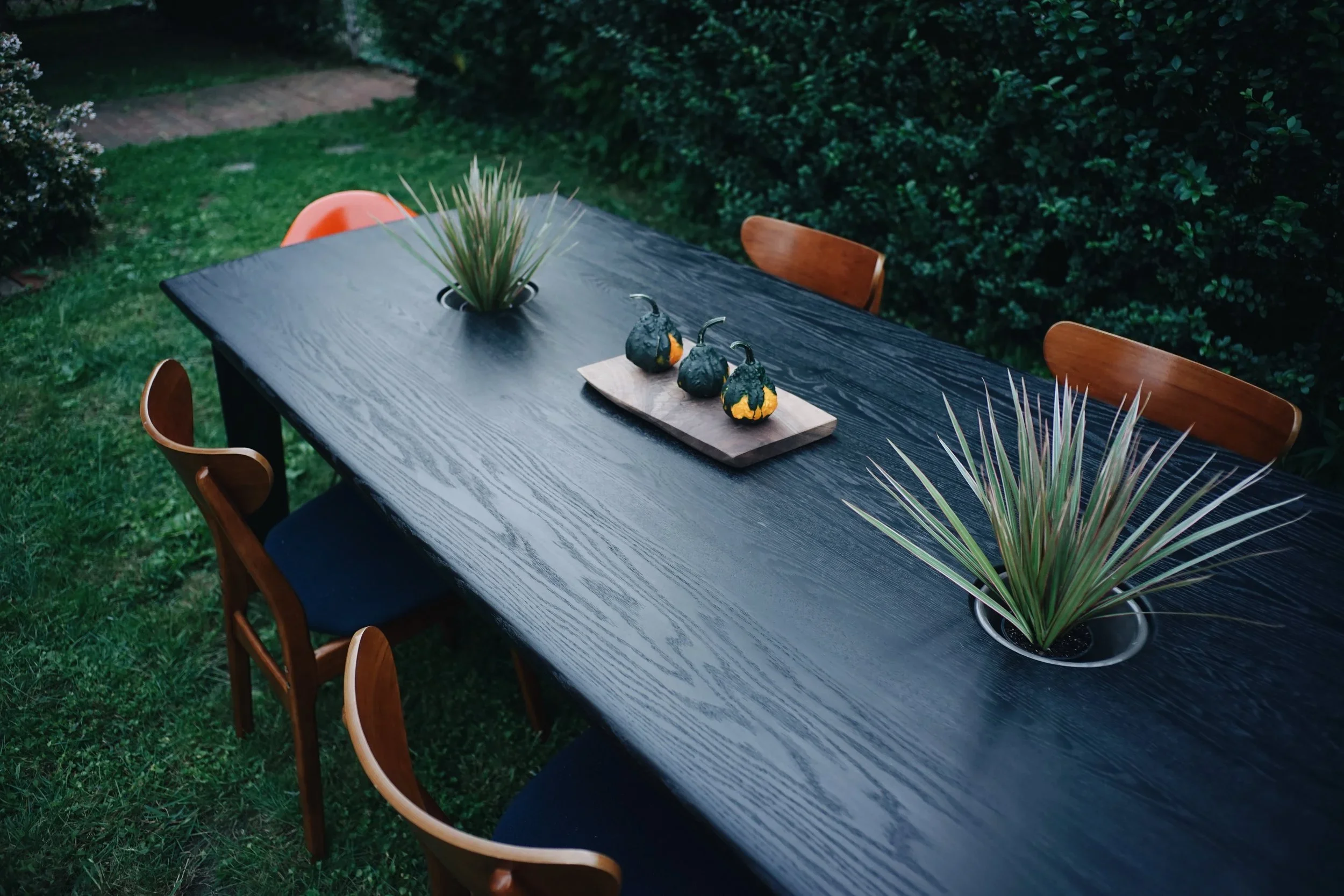
Choosing between live edge tables Wisconsin homeowners are drawn to often comes down to one thing. Do you want the wood to keep its natural shape, or do you prefer a more defined design?
I've seen how much difference that decision makes to a finished table. A slab with a beautiful natural edge can look completely different from the same wood cut into a straight rectangle. Add resin to the design, and the character changes again.
None of these approaches is automatically better. The trick is understanding what each one does to the wood, and how it will work in your home.
Live Edge Tables in Wisconsin: Letting the Wood Keep Its Shape
When I look through a stack of hardwood slabs, I'm not looking for perfectly straight edges. I'm looking at the shape the tree left behind.
A natural edge might have a gentle curve along one side. It might follow the slight bend of the trunk or show where a branch once grew. These details are part of what makes live edge furniture interesting.
Cutting everything straight would remove some of that character.
With live edge tables, the outline of the tree remains visible. The surface is prepared for everyday use, but the natural boundary is preserved wherever the design allows.
What to consider before choosing a live edge table
The shape of the slab matters more than many people realise.
Imagine a dining table with a deep curve along one side. It might look wonderful in a photograph, but if that curve takes away too much usable surface near someone's seat, it may not be the right choice for a family dining table.
A quieter natural edge might be a better fit.
The same applies to knots, cracks, and changes in grain. I don't see every natural feature as something that needs to be removed. Sometimes it's the feature that gives a slab its character. The question is whether it belongs in the design and how it should be handled.
Live edge tends to suit people who enjoy seeing the original character of the timber rather than having every line made perfectly uniform.
You can see more of this thinking in my article about why live edge furniture never goes out of style.
River Tables: A Different Relationship Between Wood and Resin
A river table brings two sections of wood together with resin between them. The resin creates a channel that can resemble a river running through the timber.
It's a striking look, particularly when the wood has a strong grain pattern.
But there's something worth understanding before choosing this style. A river table isn't necessarily the opposite of a live edge table. Many river tables use two live edge slabs, with their natural edges facing the resin channel.
The difference is the resin treatment.
How much attention should the resin receive?
Think about a walnut slab with a flowing grain pattern. You could pair it with clear resin, allowing the wood to remain the main feature. Or you could choose a more noticeable color that creates a stronger contrast.
Those choices produce very different tables.
I would always start by looking at the wood. If the grain already has plenty of movement, adding a dramatic resin color may create more visual activity than the room needs.
On the other hand, a simpler slab might work well with a more expressive resin design.
The resin should have a reason to be there. It shouldn't be added simply because river tables are popular.
Where river tables work best
River tables can suit a dining area where the table is intended to attract attention. They also work well in contemporary interiors that already combine natural materials with glass, metal, or stone.
Think about the room before choosing the resin color. A strong blue channel, for example, will become a noticeable part of the room's color scheme. Clear or subtle resin allows more attention to remain on the timber.
There is no universal answer. It depends on the wood and the surroundings.
Traditional Wood Tables: When a Simpler Shape Is Better
Not every beautiful table needs a natural edge or a river running through it.
A traditional wooden table has its own appeal. Straight edges, defined proportions, and a more familiar shape allow the grain and construction to do the talking.
I wouldn't call this a less creative approach. In fact, choosing what to leave out can be just as demanding as deciding what to add.
Take a walnut board with an interesting grain pattern. It doesn't necessarily need an unusual outline. A straightforward rectangular top can give that grain room to be appreciated without competing with other details.
The same goes for maple, oak, and other hardwoods. Their character doesn't disappear just because the edges are straight.
When should you choose a traditional design?
A traditional table may be the right choice if your dining room has existing architectural details, built in cabinetry, or other furniture with defined lines.
It can also make sense if you need a predictable seating arrangement. A rectangular top with straight edges gives you a more consistent surface around the table.
That matters if you regularly seat six or eight people and want everyone to have comfortable space.
A traditional design doesn't have to look old fashioned. The wood selection, proportions, and base can all change its appearance.
Live Edge vs River vs Traditional: What Actually Changes?
The easiest way to understand these styles is to separate the shape of the wood from the materials used in the design.
| Feature | Live Edge | River Table | Traditional |
|---|---|---|---|
| Main characteristic | Natural wood edge | Resin channel between wood sections | Defined, usually straight edges |
| Use of natural edges | Usually preserved | Often preserved along the resin channel | Usually removed or squared |
| Visual character | Organic and natural | Contrasting and expressive | Structured and understated |
| Main design decision | Which natural features to preserve | How wood and resin should relate | How to balance shape, grain, and proportions |
| Seating considerations | Natural curves may affect usable space | Depends on slab shape and table dimensions | More predictable seating area |
| Suitable interiors | Nature inspired and contemporary | Contemporary and artistic | Traditional, modern, and transitional |
One important distinction is worth repeating. A river table can also be a live edge table. These descriptions refer to different parts of the design.
Live edge describes the wood's outline. River describes the resin treatment. Traditional describes a more defined table shape.
Once you understand that, choosing becomes much easier.
Start With the Wood, Not the Style
This is where I would spend more time if we were designing a table together.
Rather than deciding immediately that you want a river table or a live edge table, look at the timber first.
A slab can change considerably once it's prepared. Grain that looks fairly quiet under rough surfaces may become more pronounced after planing. A knot might reveal a pattern that becomes the most interesting part of the finished top.
Sometimes two slabs from the same tree have completely different personalities.
Look at grain, color, and natural features
Walnut often brings deeper brown tones and can have striking grain movement. Maple tends to offer a lighter appearance. Oak has a more pronounced grain that can become an important part of the design.
These are general characteristics, not rules. Individual boards can surprise you.
I also pay attention to how the grain moves across the slab. If it bends around a knot or changes direction, I want to understand that before deciding where the edges should be cut.
A straight cut may make sense for one piece of wood. Another may deserve a natural outline.
This is why I believe choosing the right wood for a custom furniture piece deserves as much thought as choosing the final shape.
Think About the Room and the People Using It
A dining table has a job to do.
It needs to fit the room, provide comfortable seating, and work for the way people live. The design should account for those things before the first cut is made.
Here are three situations worth considering.
A busy family dining room
If the table is used for everyday meals, homework, and weekend gatherings, usable surface area matters.
A live edge slab with a pronounced curve may reduce the space available near certain seats. That doesn't rule it out, but the dimensions need careful consideration.
A traditional rectangular top may offer more predictable seating.
An open plan home with modern finishes
A live edge table can bring natural shapes into a room filled with straight cabinetry, large windows, and clean architectural lines.
It adds contrast without needing another decorative element.
A river table can also work here, particularly if the resin color relates to something already in the room.
A dining room where the table is the main feature
If the table has its own space and you want people to notice it, a distinctive slab or river design may make sense.
In that situation, I would pay particular attention to the grain and overall proportions. A large table doesn't need every possible feature added to it. Sometimes the wood itself provides enough interest.
Can You Combine Different Table Styles?
Yes. And this is one of the more interesting parts of designing custom furniture.
You could have a live edge top with a clean, contemporary base. You could use two natural edge slabs in a river design. Or you could choose a traditional rectangular top made from timber with unusually expressive grain.
The important thing is deciding which feature should lead the design.
If the wood has a dramatic shape, the base might be better kept simple. If the top is relatively quiet, the base could introduce another design element.
I prefer making these decisions after looking at the actual material rather than trying to force a particular style onto it.
That's part of the thinking behind designing one of a kind furniture. The wood, the room, and the people using the piece all have a place in that conversation.
What I Would Consider Before Building Your Table
If you're still deciding between these styles, I would begin with a few practical questions.
How many people need to sit at the table regularly?
What are the available dimensions in the room?
Do you want the natural edge to be a visible feature?
Would resin add something to the wood, or compete with it?
Are there existing colors and materials the table needs to work alongside?
Do you prefer a distinctive piece or something quieter?
I would also encourage you to look at real slabs rather than relying entirely on photographs.
A photograph can show the color and general shape, but it can't always communicate the depth of the grain or the way the natural edge moves. Seeing the actual timber can change your mind about the design.
If you are considering a custom piece, you can also browse the With The Trees Design projects for examples of how different materials and ideas have been approached.
Frequently Asked Questions
1. Are live edge tables popular in Wisconsin?
Live edge tables appeal to people who appreciate natural materials and the individual character of wood. They can work in both contemporary and traditional homes, depending on the slab, proportions, and base design.
2. Is a river table the same as a live edge table?
No. Live edge refers to preserving the natural outline of the wood. A river table uses resin between two sections of wood. A river table can also have live edges along the resin channel.
3. Which table style offers the most seating space?
A traditional rectangular table generally provides more predictable usable space because its edges are straight. Live edge and river tables can also provide comfortable seating, but the slab shape and dimensions need to be considered carefully.
4. Does a live edge table have to look rustic?
Not at all. The natural edge can be paired with a clean base, a restrained finish, and simple proportions. The result can work beautifully in a contemporary home.
5. Are river tables made with real wood?
Yes. River tables combine sections of wood with resin. The appearance depends on the timber, the resin color, and the overall design.
6. What is the best wood for a custom dining table?
There isn't one answer for every project. Walnut, maple, and oak each have different colors and grain characteristics. The individual slab, its size, and the design you're considering all matter.
7. Can I choose the wood before deciding on the table design?
Absolutely. In fact, I often think this is a good place to start. Looking at the actual timber can reveal design possibilities you might not have considered from photographs alone.
The Right Table Starts With the Right Conversation
I wouldn't choose a table style simply because it's popular or because it looks impressive in a photograph.
I'd want to know what the room looks like, how the table will be used, and what kind of wood you're drawn to. Then I'd want to spend some time looking at the material.
A natural edge might be the right choice. A river design might bring something unexpected to the room. Or a straightforward wooden table might be exactly what the space needs.
There is no reason to force the wood into a design before understanding what it has to offer.
If you're thinking about a custom table in Wisconsin, I'd be glad to hear what you're considering. You can get in touch with me here, and we can start with the wood, the room, or simply an idea you've been thinking about.